
Short answer
Build team effectiveness by defining the team's real output, examining the conditions that shape how work moves, and selecting the single constraint with the greatest consequence. Then run a 30-day experiment with an owner, observable behaviour and business evidence. Do not begin with generic team building when the real issue is unclear direction, work design, decision rights, operating discipline or manager practice.
1. Decide whether you are dealing with a real team
A team is not simply a group that attends the same meeting or reports to the same leader. For this guide, a team has an identifiable output, members whose work is interdependent and a reason to coordinate rather than complete every task independently. A regional leadership group deciding market priorities is a team. A project squad integrating product, operations and sales may be a team. A department in which specialists serve unrelated clients may be closer to a working group. The distinction matters because a working group may need clearer individual goals and information sharing, while an interdependent team also needs joint priorities, handoffs, decisions and mutual adjustment. Start by writing the collective output in one sentence. Name the customer or stakeholder who uses it, the standard that defines good enough and the period over which it matters. If members cannot agree on the output, do not jump to a trust exercise. Resolve the ambiguity about the work first. Some groups have multiple outputs; in that case, state the trade-off or sequence rather than pretending every priority is equal.
- Name the collective output, its user and the standard by which it will be judged.
- Identify where members depend on one another for information, decisions, expertise or handoffs.
- If work is mostly independent, improve the working-group practices you actually need instead of forcing a team identity.
2. Define effectiveness as results, viability and learning
Short-term output alone can hide a deteriorating team. A group may hit one deadline by exhausting key people, suppressing bad news or creating rework for another function. High morale alone can also mislead: members may enjoy working together while avoiding difficult decisions or under-serving customers. Use three tests. Results asks whether the team's output meets the needs of the people who receive it. Viability asks whether members can continue working together without the system becoming brittle, unsafe or dependent on heroics. Learning asks whether the team improves its judgement, capability and process as conditions change. These tests echo a long tradition of team-effectiveness research, including J. Richard Hackman's attention to output, the team's capacity to work together and member development. Treat them as a balanced decision lens, not a mathematical score. In a crisis, output may temporarily dominate. In a new team, learning and role clarity may lead. The leader's job is to make the trade-off visible and prevent one dimension from being maximised indefinitely at the expense of the others.
- Results: Is the output timely, useful, reliable and valuable to its real recipient?
- Viability: Can the team continue coordinating, disagreeing and recovering without chronic overload or avoidance?
- Learning: Does the team use evidence to improve decisions, routines and capability rather than repeat the same friction?
3. Gather work evidence before discussing personalities
Team diagnoses often begin with adjectives: resistant, passive, territorial, political or low trust. These labels compress a complicated system into a judgement about people. Start with evidence from work. Examine missed handoffs, duplicated effort, decision delays, customer complaints, avoidable escalation, meeting records, rework, workload concentration and questions that repeatedly return unresolved. Interview members using recent critical incidents: tell me about a decision that moved well; where did coordination break last month; what information arrived too late; what work depends on one person; which issue is discussed outside the meeting but not inside it? Ask customers and adjacent teams what they experience, because a team can feel efficient while exporting cost to others. Use a confidential pulse survey only when respondents understand how data will be aggregated and used. Do not diagnose an individual, culture or national group from a few observations. The goal is a defensible picture of the operating conditions around one shared output. Separate facts, recurring patterns and hypotheses so the team can correct the diagnosis.
- Sample actual work: decisions, handoffs, queues, errors, escalations, meeting outputs and customer feedback.
- Ask for recent incidents and observable sequences rather than general satisfaction alone.
- Protect sensitive information and make no promise of anonymity that the collection method cannot support.
4. Test Direction: is the team aiming at the same outcome?
Direction combines a clear outcome, meaningful purpose, priorities and boundaries. Teams struggle when members receive conflicting goals from different leaders, when every request becomes urgent or when success is described only as effort. Ask each member to write the team's top three outcomes for the next quarter and what the team will deliberately not prioritise. Large differences reveal more than a presentation about purpose. Trace each outcome to an enterprise, customer or operational need, then define a small set of measures and decision guardrails. A clear direction should create choice: when two demands collide, people can explain which one wins and why. It should also be challenging enough to require coordination but credible enough to guide action. In regional organisations, global, regional and local priorities may genuinely conflict. Do not ask a workshop to manufacture alignment when accountable leaders have not resolved the trade-off. Escalate the contradiction with evidence and a decision request. Once direction is clear, managers should translate it into team-level decisions repeatedly, not announce it once and assume shared understanding.
- Compare members' independent descriptions of the team's outcomes, recipients and priorities.
- Define what the team will stop, defer or decline when capacity is constrained.
- Escalate conflicting objectives to the leaders who own them instead of recasting the conflict as an attitude problem.
5. Test Design: does the structure fit the work?
Design covers membership, expertise, size, role boundaries, decision rights and interdependence. A capable team can still fail if nobody owns a critical decision, the wrong functions arrive after commitments are made, one expert becomes a permanent bottleneck or responsibilities overlap without a rule for resolution. Map the flow of one important piece of work from request to output. Mark who decides, who contributes evidence, who executes, who is affected and where work waits. Pay special attention to decisions that cross global, regional and country lines or business and enabling functions. Clarify stable ownership, but avoid turning a responsibility chart into a substitute for judgement. Not every decision needs a committee and not every consultation gives veto power. Check whether the team is a sensible size for the work and whether membership is stable enough for shared routines to form. If the group lacks essential capability or authority, acknowledge the structural gap. Coaching people to communicate better cannot compensate indefinitely for a missing product owner, inaccessible data or an approval process designed around another operating reality.
- Map one real workflow and identify queues, duplicated ownership, late involvement and single-person dependencies.
- Clarify who decides, who provides evidence, who executes and which decisions require escalation.
- Treat missing authority, capacity, data and expertise as design issues rather than motivation problems.
6. Test Delivery: can work move from commitment to completion?
Delivery is the team's ability to turn priorities into coordinated execution. Look for a visible planning rhythm, manageable work in progress, explicit dependencies and reliable closure. Many teams mistake activity for progress because meetings generate updates without decisions or owners. Choose one unit of work and reconstruct its path: when was it accepted, who owned the next move, where did it wait, which assumption changed and when did the customer receive value? This exposes whether the obstacle is capacity, sequencing, approval, information or follow-through. Establish a light operating rhythm: a short planning conversation, a decision and risk review, and a retrospective tied to actual output. The exact cadence depends on the work; do not copy a software ritual into every function. Limit simultaneous priorities so bottlenecks become visible. Close meetings with an action, owner, evidence and date. The aim is not more process. It is enough shared visibility for members to coordinate early, surface risks before they become emergencies and finish work without relying on private chasing.
- Trace commitments to completed outputs and measure wait, rework and unresolved dependencies.
- Limit work in progress and make priority changes explicit rather than silently adding to the queue.
- Use meetings to decide, coordinate and learn; move information that needs no discussion to a suitable channel.
7. Test Dialogue: can the team exchange the information the work needs?
Dialogue is not constant agreement or unrestricted disclosure. It is the capacity to ask for help, share incomplete information, challenge assumptions, admit errors and disagree about the work without humiliation or retaliation. Google's Project Aristotle popularised five conditions within its own company context—psychological safety, dependability, structure and clarity, meaning and impact. That research is useful as a prompt, not a universal ranking for every organisation. Observe what happens when someone raises a risk, questions a senior view or reports a mistake. Does the team become curious, defensive, silent or punitive? Examine whose evidence enters decisions and whose contribution is routinely overlooked. In multilingual and cross-border teams, send consequential questions in advance, create time for silent thinking and provide an asynchronous route where appropriate. Managers should model fallibility, invite relevant dissent, respond productively and still hold clear standards. Psychological safety without accountability can become comfortable avoidance; accountability without safety can hide problems until they are expensive.
- Observe responses to bad news, questions, mistakes and disagreement—not only participation volume.
- Invite input by expertise and decision relevance, and let more senior voices speak later when their view may anchor the room.
- Separate respectful challenge from conduct that is demeaning, unsafe or outside organisational policy.
8. Test Discipline: does the team keep agreements and correct drift?
Discipline is the set of norms, review mechanisms and consequences that makes coordination dependable. It includes preparation, punctual information, documented decisions, ownership, escalation and repair when commitments are missed. Avoid writing a long team charter filled with abstract values. Instead, identify four or five behaviours tied to recurring work: decisions are recorded with an owner and review date; risks are raised within one working day of discovery; disagreement happens in the decision forum rather than through post-meeting lobbying; and missed commitments are renegotiated before the deadline. Decide how the team will notice drift and who can call it out. The manager must apply the standard consistently, including to high performers and senior members. When a commitment fails, diagnose whether the cause was unclear ownership, a changed priority, insufficient capability, overload or avoidant behaviour. The response should fit the cause. Repeatedly rescuing people may protect a deadline while weakening the team; punishment for a system failure may drive future problems underground. Accountability means clear expectations, proportionate support, visible follow-through and fair consequences.
- Turn values into a small number of observable agreements connected to recurring work.
- Review missed commitments for clarity, capacity, capability, priority and behaviour before choosing a response.
- Make repair normal: name the miss, address the consequence, update ownership and learn from the cause.
9. Test Development: is the team becoming more capable through the work?
Development is how the team builds judgement, distributes capability and improves the system while delivering. A team that depends on one expert or manager for every difficult decision may appear efficient until that person is absent or demand increases. Identify critical capabilities and single points of failure. Use peer review, shadowing, rotating roles, after-action reviews and coaching on live work to spread knowledge without diluting accountability. Team training can help: a meta-analysis by McEwan and colleagues found positive effects for team training interventions across teamwork and performance outcomes, with practical, interactive designs among the useful approaches. That evidence does not mean any workshop will improve any team. An intervention must address a diagnosed need and be supported by the work environment. Review not only what the team achieved but what it learned, which assumption changed and what routine should be adjusted. For HR and L&D, the design question becomes: which capability is preventing better performance, what practice opportunity exists in work and what manager reinforcement will make the new behaviour usable?
- Map critical expertise and decisions that currently depend on one person.
- Use live work, feedback and reflection so learning changes a decision, routine or handoff.
- Ask managers to create practice opportunities and review evidence rather than send people to training and wait for transfer.
10. Prioritise one constraint instead of fixing everything
The six conditions are connected, but an intervention needs a focus. Score each condition only after reviewing evidence, then ask three questions: What is the consequence of leaving this unchanged? How strongly does the evidence link it to the team's output? How much influence does the team have over it in the next month? Select one primary constraint and at most one supporting condition. A team with unclear priorities may also report low trust because members protect their own functions; starting with a trust workshop could miss the conflicting goals. A team with clear goals but silent risk reporting may need manager response practice and a new review routine. Distinguish symptoms from causes and test the diagnosis with the team. State what evidence would prove the hypothesis wrong. Some constraints sit outside the team's authority—conflicting incentives, unfilled roles, poor technology or unresolved senior decisions. Escalate these with a clear business consequence. Do not burden the team with an improvement plan for a system it cannot change.
- Rank consequence, evidence strength and local influence rather than averaging a long survey into one score.
- Choose one primary constraint and explain why other visible problems are secondary for now.
- Record disconfirming evidence and update the diagnosis when the experiment produces a different result.
11. Run a 30-day workplace experiment
Translate the priority into a bounded change in how work happens. Write a hypothesis: If we change this condition through this behaviour, then this evidence should improve because of this mechanism. For example, if the team publishes decision rights and ends its weekly meeting with a decision log, unresolved ownership should fall because members can act without waiting for private confirmation. Establish a baseline using two or three weeks of available data or a sample of recent work. Name one accountable owner and the people who must participate. Define leading evidence, such as decisions recorded correctly, and outcome evidence, such as reduced wait time or rework. Set guardrails so the test does not create customer, legal, safety or workload risk. Check progress weekly and review after 30 days. Keep, adapt or stop the practice based on evidence. Avoid declaring success because people liked the new routine. Equally, do not reject a useful practice only because the business outcome did not move immediately; inspect adoption, time lag and competing factors.
- Hypothesis: condition, behaviour, expected evidence and reason the change should work.
- Measurement: baseline, leading behaviour, work outcome, guardrail and source of data.
- Decision: keep, adapt, stop or escalate, with an owner and next review point.
12. Choose a broader intervention only when the evidence supports it
A 30-day experiment may show that the team can improve through manager practice and a clearer operating routine. It may also reveal a deeper capability or system need. Use team facilitation when members need to make collective decisions, redesign a workflow or establish agreements they must own together. Use manager coaching when leader behaviour is a central constraint and confidential reflection plus workplace action is appropriate. Use a workshop when several teams need shared concepts and repeated practice for the same observable moments. Use a longer programme when capability must develop across levels and requires application, reinforcement and evidence reviews over time. Use organisation design or executive governance—not learning—when reporting lines, decision rights, incentives or resource allocation are the main cause. A responsible partner should help narrow the intervention, not sell maximum activity. Define the work outcome, target behaviours, sponsor responsibilities and evidence before selecting format. Recheck the diagnosis during delivery because teams and business conditions change.
- Facilitation: a real team must decide, design or reset how it works together.
- Coaching or training: specific leader or team behaviours require practice, feedback and transfer support.
- Governance or organisation design: authority, incentives, capacity or structure prevents the required behaviour.
Illustrative example: a regional product-launch team
This is a fictional composite, not a SEED client story or claimed result. A regional product-launch team repeatedly misses country-readiness dates. Members say trust is low and request team building. Work evidence shows a different pattern: global product decisions change without a named owner for local impact, country teams join after customer commitments are drafted, and the weekly meeting contains updates but no decision record. The team uses the framework. Direction is broadly clear and members speak candidly, but Design and Delivery are weak. They choose one constraint: decision ownership across regional and country roles. For 30 days, every material launch decision receives an owner, required contributors, deadline and country-impact field. The weekly meeting reviews only overdue decisions, new risks and cross-market trade-offs. Leading evidence is the proportion of decisions with complete ownership. Outcome evidence is time waiting for local clarification and the number of late changes. A workload guardrail checks whether country teams are being pulled into unnecessary decisions. At the review, the team can decide whether to keep the routine, redesign it or escalate unresolved governance. The intervention is small because the diagnosis is specific.
- Initial request: improve trust through team building.
- Evidence-based diagnosis: unclear cross-level decision ownership and weak closure routines.
- Experiment: one decision record, a focused weekly review and evidence about waiting and late change.
Trade-offs leaders should make explicit
Team effectiveness is not a state in which every desirable quality is maximised. Speed can reduce consultation; resilience can require spare capacity; inclusion can take more time at the front of a decision while preventing expensive rework later; stable roles build fluency while rotation spreads capability; local autonomy improves responsiveness while shared standards protect coordination. The right balance depends on consequence, reversibility, expertise and risk. State the trade-off in the decision rather than hiding it inside a slogan. For a reversible, low-risk experiment, the team may prioritise speed and learn quickly. For a safety, employment or regulatory decision, appropriate consultation and control take precedence. Review whether one subgroup repeatedly absorbs the cost of the chosen balance. Good team practice does not remove tension. It gives people a fair, evidence-informed way to make the tension visible, decide and revisit the result.
- Speed versus involvement: match the process to risk, reversibility and where relevant knowledge sits.
- Consistency versus local adaptation: define a common core and the conditions for variation.
- Delivery versus development: protect critical output while deliberately reducing long-term dependence on heroes.
The SEED Team Performance System
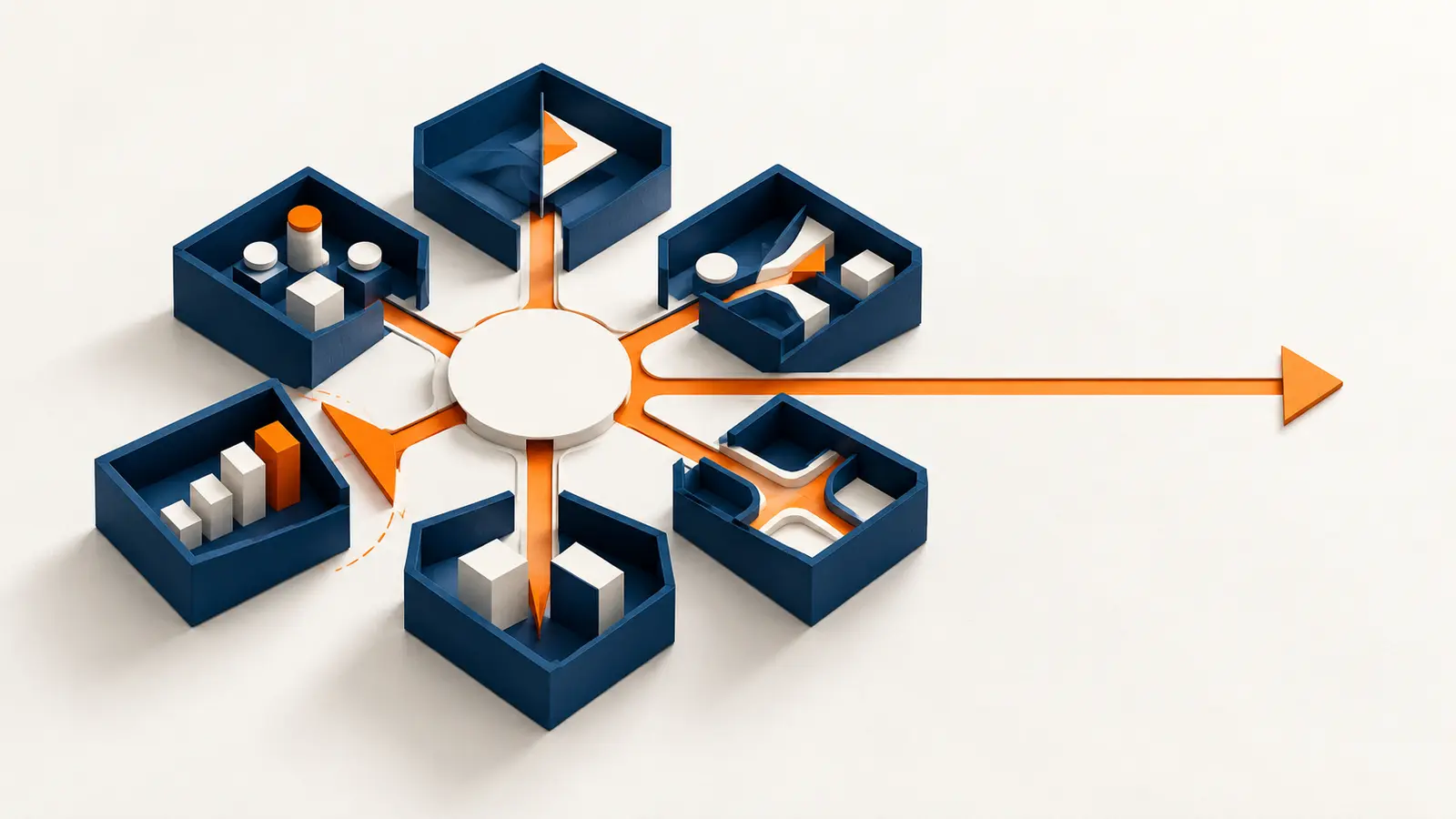
Use these six connected conditions to organise evidence and choose an intervention. This is a practical SEED synthesis, not a validated psychometric instrument or a claim that one model predicts every team's performance.
Direction
Shared output, purpose, priorities, measures and boundaries.
Design
Membership, expertise, interdependence, roles and decision rights.
Delivery
Planning, handoffs, work flow, coordination and closure.
Dialogue
Candour, listening, challenge, help and information flow.
Discipline
Agreements, accountability, review, escalation and repair.
Development
Practice, feedback, reflection, capability and adaptation.
Match the signal to the condition and first response
Use each row as a hypothesis to test against work evidence. Similar symptoms can have different causes.
| Observed signal | Condition to test first | Evidence to inspect | Useful first response |
|---|---|---|---|
| Priorities change and every request is urgent | Direction | Conflicting goals, planning decisions, work stopped or deferred | Resolve the top outcomes and explicit trade-offs with accountable leaders. |
| Decisions wait or return repeatedly | Design | Decision owners, required contributors, approval steps and queues | Clarify decision rights and involve essential expertise earlier. |
| Many meetings, slow completion and frequent chasing | Delivery | Work in progress, handoffs, wait time, rework and meeting outputs | Limit active priorities and use a visible commitment and decision rhythm. |
| Risks emerge late or disagreement moves outside meetings | Dialogue | Responses to bad news, speaking patterns and closed issues | Change leader responses and create safer, structured routes for challenge. |
| Agreements are clear but often missed | Discipline | Ownership, capacity, changed priorities, follow-up and consequences | Diagnose the cause of misses and apply a consistent repair routine. |
| One expert or the manager solves every difficult issue | Development | Escalation patterns, skill coverage and single-person dependencies | Create guided practice, peer review and deliberate transfer of judgement. |
| Several conditions appear weak | System-level constraint | The strongest link to output, consequence and local influence | Choose one constraint for a 30-day test and escalate what the team cannot control. |
Common mistakes
- Starting with a retreat, workshop or team-building activity before defining the output and diagnosing the work system.
- Treating low morale, silence or missed deadlines as proof of one cause without testing alternatives.
- Using a survey average as the diagnosis while ignoring workflow, customer and decision evidence.
- Labelling people resistant, political or low trust instead of describing observable incidents and consequences.
- Trying to fix all six conditions at once, making it impossible to learn what changed performance.
- Asking the team to solve conflicting goals, authority, incentives or resourcing owned by senior leaders.
- Confusing psychological safety with comfort or removing standards and consequences.
- Copying agile ceremonies, charters or meeting rules without connecting them to the team's actual work.
- Measuring satisfaction immediately after an activity and presenting it as evidence of team effectiveness.
- Ignoring the cost exported to customers, adjacent teams, contractors or quieter members.
- Using confidential team data to rate individuals or making anonymity promises the method cannot keep.
- Scaling an intervention before a bounded test shows adoption, usefulness and acceptable trade-offs.
Practical checklist
The team has an identifiable collective output, recipient and quality standard.
Interdependence is real and visible in decisions, expertise or handoffs.
Effectiveness covers results, viability and learning—not one proxy alone.
Evidence includes recent work, customer or stakeholder experience and member observations.
Facts, patterns, hypotheses and unknowns are labelled separately.
Direction, Design, Delivery, Dialogue, Discipline and Development have each been tested.
The primary constraint has a clear link to output and a credible alternative explanation has been considered.
System issues outside the team's control have an owner and escalation route.
The 30-day experiment changes one observable behaviour or routine.
The experiment has an owner, participants, start date, review date and decision rule.
A baseline, leading evidence, outcome evidence and guardrail are recorded.
Legal, safety, conduct and workload risks use the appropriate formal process.
The manager knows what to model, reinforce, observe and stop doing.
Data collection is proportionate, confidential and not used to label individuals.
The review will choose keep, adapt, stop or escalate based on evidence.
Any broader facilitation, coaching or training response is tied to a diagnosed capability need.
Reusable ChatGPT prompt: diagnose one team-performance constraint
Use this to organise evidence, not to diagnose personalities. Remove names, personal data, client information and sensitive commercial details before using any AI tool.
I am reviewing the effectiveness of a workplace team. Act as a critical thinking partner. Do not diagnose personalities, invent motives or recommend generic team building.\n\nAnonymised context:\n- Team's collective output and recipient:\n- Why members are interdependent:\n- Current business measures or customer evidence:\n- Recent decisions, handoffs, delays, rework or escalations:\n- What happens when risks, mistakes or disagreement appear:\n- Current roles, decision rights and meeting rhythm:\n- Critical skills or single-person dependencies:\n- Constraints the team cannot control:\n\nUsing the SEED Team Performance System—Direction, Design, Delivery, Dialogue, Discipline and Development—help me:\n1. Separate facts, patterns, assumptions and missing evidence.\n2. Assess each condition using only the information provided.\n3. Identify the strongest alternative explanation for the main symptom.\n4. Rank the top two constraints by consequence, evidence strength and local influence.\n5. Recommend one 30-day workplace experiment, not a generic activity.\n6. Define the owner, changed behaviour, baseline, leading evidence, outcome evidence and guardrails.\n7. List what would disconfirm the diagnosis and when to keep, adapt, stop or escalate.\n8. Flag any legal, safety, conduct, workload or governance issue that requires a formal process rather than a team intervention.\n\nAsk concise questions for missing evidence. Label every inference. Do not claim causation from correlation or promise a business outcome.Source: SEED Academy, How to Build an Effective Team: A Practical Team Effectiveness Framework. https://www.seedacademysoa.com/resources/guides/team-effectiveness-framework
Frequently asked questions
01What is team effectiveness?
Team effectiveness is the capacity of an interdependent group to produce an output that serves its recipients, remain able to work together and improve its capability over time. It is broader than productivity, engagement or harmony alone.
02What is the best team effectiveness model?
No model is best for every team and purpose. Choose a model that helps you examine the team's real work, makes important conditions visible and leads to a testable decision. The SEED Team Performance System is a practical synthesis for diagnosis and action, not a validated psychometric instrument.
03How do you measure team effectiveness?
Combine work outcomes with evidence of coordination and learning. Examples include quality, timeliness, customer value, decision speed, wait time, rework, reliable handoffs, early risk escalation, capability coverage and repeated improvement. Select a small set connected to the team's output.
04Is psychological safety the most important factor in team effectiveness?
Psychological safety is important when people need to raise risks, questions, mistakes and disagreement, but it is not a complete diagnosis. A team also needs clear direction, suitable design, dependable delivery, accountability and development. Test which condition constrains the work in context.
05When should a manager use team building?
Use a team intervention when evidence shows members need to build relationships, shared understanding or collaborative skill for interdependent work. Do not use it to avoid unresolved priorities, missing roles, weak governance, harmful conduct or resource problems that require a different response.
06How long does it take to improve team effectiveness?
There is no universal timetable. A focused operating practice can be tested in 30 days, while capability, trust and structural change may require sustained work. Set a review period appropriate to the team's work cycle and look for both adoption and outcome evidence.
07What is HR or L&D's role in team effectiveness?
HR and L&D can help diagnose capability needs, design facilitation or practice, prepare managers, protect responsible measurement and evaluate workplace application. They should also distinguish learning needs from organisation design, governance, resourcing, conduct and technology issues.
Sources
- Singapore Ministry of Manpower — Tripartite Workgroup recommendations to strengthen human capital capability (24 September 2026)
- Institute for Adult Learning Singapore — People-Driven Innovation Strategy (10 April 2026)
- Hackman — From causes to conditions in group research, Journal of Organizational Behavior (2012)
- Google re:Work — Understand team effectiveness
- McEwan et al. — The effectiveness of teamwork training on teamwork behaviors and team performance, PLOS ONE (2017)
- CIPD — High-performing teams: an evidence review (2023)
Improve the system around the work
Turn a team-performance challenge into a practical capability response.
SEED Academy designs workplace-based programmes that connect leadership and team practice to real decisions, observable behaviour and business capability.
Explore Training Programme Design →